
Roseville City Directory Shelf
Every Roseville residents directory project should start at the library catalog. A subject search for Roseville directories pulls up nine records. The shelf holds telephone books, business guides, and a railroad centennial volume. It also includes a Chamber membership roster. Each type answers a different question about past residents of Roseville. Telephone books tie a subscriber to an address and number. Classified guides trace businesses. Criss-cross volumes flip the lookup. Start with a street address and work toward the occupant names.
| Collection | Years | Publisher or imprint | Where held | Access |
|---|---|---|---|---|
| Roseville Telephone Co. directory | Dec. 1, 1914 | Roseville Telephone Co. | Downtown Library, Record Storage R2-C3-S4-B1 | Reference; one unpaged illustrated 20-cm reproduction |
| Roseville Telephone Directory | 1922 | Not exposed in the research | Local History catalog | In-library reference |
| Tribune and Register business directory | 1925-26 | Tribune and Register | Local History catalog | In-library reference |
| Numerical telephone/classified guide | 1929-30 | Not exposed in the research | Local History catalog | In-library reference |
| Chamber business/professional directory | c. 1947 | Chamber | Local History catalog | In-library reference |
| Roseville and Railroads Gold Centennial | 1948 | Press-Tribune | Local History catalog | In-library reference |
| Roseville telephone directory | Nov. 1956 | Not exposed in the research | Local History catalog | In-library reference |
| Polk's Roseville-Citrus Heights catalog | 19uu catalog date | Polk's | Local History catalog | Exact volume years not exposed |
| Haines / EDR criss-cross evidence | 1971, 1977, 1981, 1986, 1990; 1992, 1995, 2000, 2005, 2010, 2014, 2017 | Haines and EDR | Official county environmental report | Directory images inspected |
| Chamber membership directory | 1999 | Chamber | Local History catalog | In-library reference |
Treat these catalog entries as confirmed checkpoints rather than a complete annual run. The 1914 catalog record supports Save Search, Email, RSS, and export. Polk's entry carries a literal 19uu date. Ask library staff which local volume years actually sit on the shelf.
Roseville Telephone Directory Beginnings
Roseville's earliest directory grew out of a railroad story. Junction began at the Central Pacific crossing on January 29, 1864. O.D. Lombard's plat laid out blocks 1 through 55. Southern Pacific absorbed Central Pacific in 1885, then moved its terminal and shops from Rocklin in 1906. Roseville incorporated three years later. The changes drew names into a railroad town.
The Roseville Telephone Co. issued its first volume on December 1, 1914, the same year the company launched with 160 subscribers. That thin book opens a window onto the utility network, not a full population list. Past residents of Roseville without a telephone never made it in. The same went for anyone outside the service area.
| Date | Roseville change | Directory value |
|---|---|---|
| 1864 | Crossing and Lombard plat | Early Junction blocks and streets |
| 1885 | Southern Pacific acquired Central Pacific | Railroad growth context |
| 1906 | Terminal and shops moved from Rocklin | Places later names in growth |
| 1909 | Roseville incorporated | Municipal setting |
| 1914 | Telephone company began, 160 subscribers | Matches first verified volume |
The 1914 item is a single unpaged, illustrated reproduction measuring 20 centimeters. Pair its names and addresses with city history, newspapers, or a deed for a fuller resident lookup.
Roseville Directory Years, 1922-1956
Later checkpoints in the Roseville residents directory record shift the record type itself. The 1922 telephone volume still ties each subscriber to an address and number. Then the emphasis moves toward commerce. The 1925-26 Tribune and Register business directory leans on firms, services, and the commercial core. So does the 1929-30 numerical telephone and classified guide. A classified name may point to a business contact rather than a household. Record the title and section with every citation.
Civic and business context arrives with the Chamber business and professional directory from about 1947. The Roseville and Railroads Gold Centennial of 1948 adds to that picture. The November 1956 telephone directory circles back to the subscriber network. Much later, the 1999 Chamber membership directory offers an organizational snapshot. None of these is a modern resident roll; each belongs to its period.
Reverse directories fill a different role in the Roseville street directory story. Haines editions appear for 1971, 1977, 1981, 1986, and 1990. EDR editions follow in 1992, 1995, 2000, 2005, 2010, 2014, and 2017. A criss-cross directory changes the method, not just the page count of one series.
How Roseville Directory Entries Read
Every Roseville directory entry depends on its volume. Telephone books join subscriber, address, and number. Classified guides join businesses. Haines starts with a street and number, then lists occupant names. Polk's begins with a name and may link household, occupation, and address. Abbreviations vary locally, so transcribe what is printed rather than assuming a familiar pattern.
| Name | A subscriber, household name, business name, or occupant, depending on the directory type. |
|---|---|
| Occupation or trade | Traditionally associated with Polk's household entries; the exact Roseville abbreviation field is not verified. |
| Spouse or household note | Do not assume a spouse field. Treat any printed relationship note as a clue tied to that edition. |
| Address | Telephone volumes connect address and number; Haines gives a street number followed by occupant names. |
| Owner or renter mark | No local symbol is confirmed in the supplied evidence. Do not infer ownership or occupancy from an unverified mark. |
These distinctions keep a directory find honest. A telephone line proves a subscriber connection. A street-first line captures an occupant snapshot, while a business line shows only a commercial affiliation. No single line establishes ownership, year-round presence, or a complete household.
- Criss-cross directory
- An address-first directory moving from street number to occupant names. Roseville's Haines and EDR evidence uses this approach.
- Householder index
- A name-first aid for locating a household or subscriber. A separate Roseville section is not confirmed here.
- Abbreviation key
- The publisher's explanation of short forms and symbols. Read it before interpreting any local mark.
Vineyard Road's Roseville Directory Clue
A county environmental report cites Roseville directory images for Vineyard Road. Polk's 1963 and 1966 editions list no such street. Haines begins coverage in 1971. EDR editions carry the street through 2017 with a number followed by occupant names. The 2017 entries include 2351 and 2359 Vineyard Road. That is a concrete local case of address-first searching.
Absence from one edition proves nothing about residents. The street may have fallen outside coverage or been indexed differently. Compare nearby volumes. Confirm the number. Note whether the source is Polk's, Haines, or EDR.
For family history, a later address-first record can bridge a gap. It cannot backdate a name. Pair it with a census, a deed, probate, a newspaper notice, or an obituary.
Note: A missing street in one Roseville directory is an index result. It is not proof that no resident lived there.
Roseville's Local History Desk
The Local History Center at the Downtown Library, 225 Taylor St., is open during library hours. Materials are permanent and noncirculating. The Family History Collection, Roseville Genealogical Society docent hours, and phone 916-774-5221 provide assisted searching. Check the Roseville Local History Center information before traveling.
The library's A-Z database list includes Heritage Hub obituaries and death notices from 1824 to the present, the California Digital Newspaper Collection, Press-Tribune clippings back to 1920 in-library, Sacramento Bee coverage from 1984 to the present, Archives Unbound, and the catalog. Placer eLibrary provides Ancestry Library Edition in-library.
- Use the catalog for title, date, publisher, and shelf clues.
- Ask the Local History Center about permanent reference volumes and docent help.
- Search Heritage Hub and newspaper databases for an obituary or notice that explains an address change.
- Use Ancestry Library Edition in-library for another census index.
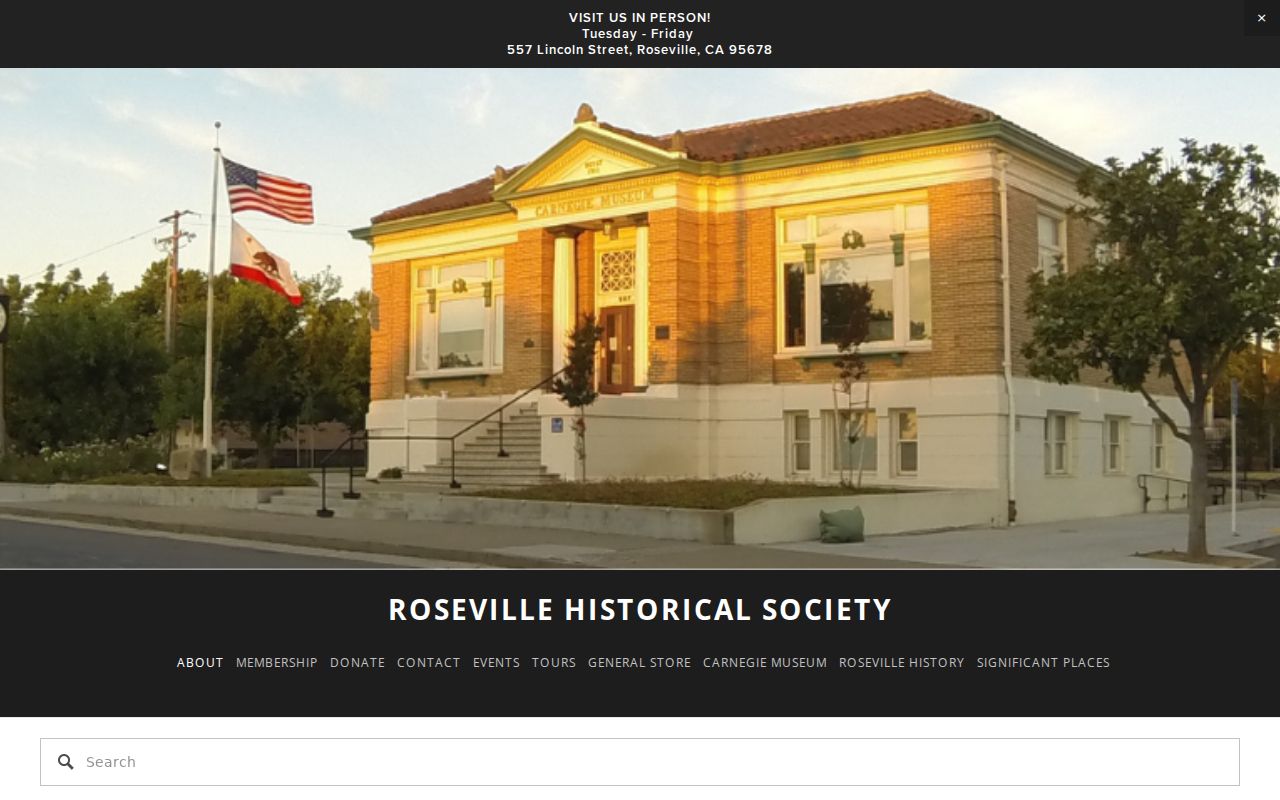
The Roseville Historical Society archive widens the net with scanned and indexed collections, historic newspapers, and research requests handled by staff. Its Carnegie Museum keeps Tuesday through Friday hours, noon to 4. Together these groups anchor local resident lookup work for Roseville.
A Roseville newspaper clipping held by the historical society proves one thing, and a printed Roseville city directory proves another. Cite each separately, since different custodians keep different pieces of the trail.
Roseville City Directories Beside Census Records
Census takers counted households once a decade. A Roseville city directory fills the space between those checkpoints with a local snapshot. Match the 1914 Roseville volume against the 1910 and 1920 census. Set 1922, 1925-26, and 1929-30 beside 1920 and 1930. For 1948 and 1956, use 1940 and 1950. Laid side by side, the records can surface a move, a household shift, or a new street number. They can also reveal a changed business name.
The 1950 census is the most recent one open to the public. A 72-year rule governs that release. The 1960 count follows on April 1, 2032. Until then, deeds, probate files, newspapers, and obituaries carry the story forward. A directory line hints at where to look next. A deed or probate file anchors a legal or family tie.
Roseville's directory history mirrors its geography. Early Junction and railroad records look nothing like the later west-side subdivisions. Names such as Fiddyment, Cirby, Kaseberg, Buljan, Astill, Doyle, and Mahany can label a person or a place. Search both contexts.
Trace Roseville Families By Directory Year
Family history works best as a dated sequence. Treat each Roseville city directory entry as one step in that chain. Pick the nearest volume, copy the exact spelling and address, then test the line against the next source you find.
- Choose the closest directory year and copy the name, address, number, and source type exactly as printed.
- Check the name-first and address-first arrangements when the volume provides both, using the street and number to separate namesakes.
- Pair 1914 with 1910 and 1920, 1922-30 with 1920 and 1930, and 1948 or 1956 with 1940 and 1950.
- Extend the trail with deeds, probate, newspapers, and obituaries. County Archives records can help with older ownership and family links.
- Record an absence as a question. Test moved, died, changed name, and unlisted possibilities against nearby editions and other records.
The County Archives at 11523 C Ave. in Auburn hold a deep paper trail. Deeds run from 1851 to 1960. Assessment rolls and maps span 1851 to 1961. Probate reaches through 1960, wills through 1963. Naturalizations cover 1852 to about 1960. Those holdings can tie a directory name to an estate record. For a current person, the Roseville resident lookup is the right tool. Use it rather than an old directory stretched past its evidence.
Roseville Directory Gaps And Access
Roseville city directories have no complete online run. The catalog still offers Save Search, Email, RSS, and export. The books remain local-history reference material. The Local History Center serves as the main in-person channel, with staff and docent help.
The Roseville Historical Society takes research requests and scans and indexes its archives. The Placer County Archives sits at 11523 C Ave. in Auburn. It works by appointment Monday and Tuesday, 9 to noon and 1 to 3, at 530-889-7789. Deeds, maps, probate, wills, naturalizations, newspapers, and obituaries often supply the missing link.
- Search the library catalog before a visit and save the record details.
- Ask the Downtown Library Local History Center for a permanent, noncirculating volume.
- Send a research request to the Roseville Historical Society when an archive or newspaper index may hold the clue.
- Book the County Archives appointment when the trail crosses into older deeds, maps, probate, wills, or naturalizations.
Careful access keeps the Roseville city directory collection intact and keeps historical fact separate from inference.